Thougth that this might be a nice piece of music / video
Thursday, February 13, 2014

Tuesday, October 15, 2013
Today, we climbed Bear Mountain in Connecticut. It is not the highest point in Connecticut (that is on a shoulder of Mount Frissell in Massachussets), but it is the highest mountain peak. We did this as a shake down hike to next week's climb of Mount Monadnock in southern New Hampshire.
The trail head:

A dedication along the way:

Reflections on a mountain pool

Mountain pond south of the summit
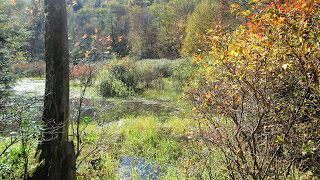
On the trail

A stone wall

The trail head:

A dedication along the way:

Reflections on a mountain pool

Mountain pond south of the summit

On the trail

A stone wall

Saturday, April 6, 2013
Today, we hit two locals during a play date. Here is Paul at New Preston falls with a friend.


Off to Maricosta preserve for our second cache
The corn field before the grass comes up

Friend across the fields of gold

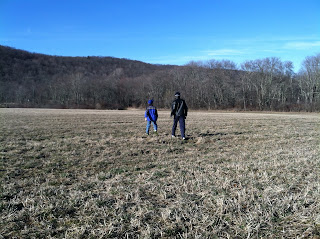

Friend with the falls in the background

Paul with friend and falls behind


Cheesy self

Off to Maricosta preserve for our second cache
The corn field before the grass comes up

Friend across the fields of gold

Paul with Friend crossing the field

Monday, April 1, 2013
White's Wood Monday Jaunt
Paul really wanted to go out again today, so we did a quick after dinner jaunt out to white memorial and found "you've got mail:" . This was one of the most interesting geocaches that we found - a great late evening trip! Amazing and highly recommended.

Sunday, March 31, 2013
A nice Easter day jaunt.
Today, we celebrated Easter. Began our day at 6:30 with Sunrise Service at the Stone Church on New Preston Hill. It was cold, but not as bad as in previous years. Anne Marie Davenport gave a great sermon and lots of folks from all three churches attended.
Afterwards there was the early morning nap with a quick egg hunt and then off to the main service at 10:00. Paul accompanied me and we brought empty plastic eggs for an impromptu hunt after church. John delivered a fine message about "the end" (vs. the beginning). Was a bit sad not to sing with the choir, but was invited to do the last minute thing if needed in the future.
After a nice Easter dinner, we went out geocaching. Weather was a bit sketchy, but we made it out and had a good time. We were able to find the above all, but could not find the Steep Rock Pinnacle (we found the letterbox, but not the geocache). Here is the proof:
Paul at the start of the trail (still some snow up in Warren!)


The Above All geocache


Bench mark at Above All

The steep rock pinnacle


Today, we celebrated Easter. Began our day at 6:30 with Sunrise Service at the Stone Church on New Preston Hill. It was cold, but not as bad as in previous years. Anne Marie Davenport gave a great sermon and lots of folks from all three churches attended.
Afterwards there was the early morning nap with a quick egg hunt and then off to the main service at 10:00. Paul accompanied me and we brought empty plastic eggs for an impromptu hunt after church. John delivered a fine message about "the end" (vs. the beginning). Was a bit sad not to sing with the choir, but was invited to do the last minute thing if needed in the future.
After a nice Easter dinner, we went out geocaching. Weather was a bit sketchy, but we made it out and had a good time. We were able to find the above all, but could not find the Steep Rock Pinnacle (we found the letterbox, but not the geocache). Here is the proof:
Paul at the start of the trail (still some snow up in Warren!)

The Radar installation at Above all

The Above All geocache


Bench mark at Above All

The steep rock pinnacle


Tuesday, March 26, 2013
Great Day Geocaching with Paul. We went to Paugussett State forest in Newtown (0ff Hanover Road). This was a good time of year to go as the lake was very quiet. Found two of Al's trail geocaches on the way.
Paul Opens the first Cache found

A view of Lake Lillinona through the trees

Fire ring with benches near the lake

Home of one of the caches

Lake Lillinonah

Looking up is the key!
 This was a great way to start the Spring. It was especially nice to do this hike before the lake gets busier. We only saw one other group hiking and only one group on the water. Otherwise we had the place to ourselves!
Paul Opens the first Cache found

A view of Lake Lillinona through the trees

Fire ring with benches near the lake


Lake Lillinonah

Looking up is the key!

Monday, December 21, 2009
The connectivity of Concept
Today, I was mulling over some ideas to write about. I was drawn to the article that I saw in BBC Science about a mountain range in Antarctica that is below the ice cap. It is certainly not the “Mountain of the Blue Moon” from the book Lost Horizon, however, a unexplored mountain is still very intriguing – even if it is under an ice sheet. Here is the address for this article: http://news.bbc.co.uk/2/hi/science/nature/8420837.stm .
I have also been thinking about a short video clip that I saw in my Science methods teaching class. This video showed a kid experimenting with Mentos and diet coke. Here is the link for the Wikipedia page on that experiment: http://en.wikipedia.org/wiki/Diet_Coke_and_Mentos_eruption .
After looking at both, it turns out that I do not have to choose as both ideas have a common theme! What could a kid exploding experiment and a buried mountain chain have in common you wonder? Well, the answer is a concept called nucleation.
Here is the deal on the diet coke / Mentos experiment:
“MythBusters concluded that the caffeine, potassium benzoate, aspartame, and CO2 gas contained in the Diet Coke and the gelatin and gum arabic ingredients of the Mentos all contribute to the jet effect. In addition, the MythBusters theorized that the physical structure of the Mentos is the most significant cause of the eruption due to nucleation”.
And here is the deal on the Antarctic Mountain range:
It led many to speculate that the Gamburtsevs might be old "hot spot" volcanoes that had punched their way through the Earth's crust, much like the Hawaiian Islands have done in the middle of the Pacific.
 The range has since become the subject of intense scientific fascination because it was almost certainly a nucleation point some 30 million years ago for the huge ice sheets now covering Antarctica.
So, what exactly is nucleation anyway? Well, here is a brief description:
“Nucleation is the extremely localized budding of a distinct thermodynamic phase. Some examples of phases that may form via nucleation in liquids are gaseous bubbles, crystals, or glassy regions” Available: http://en.wikipedia.org/wiki/Nucleation .
To me, the most interesting thing is that these two seemingly totally unrelated phenomenons have a common physical theme. In many ways, it showcased a reason for us the study aspects of science that may seem impractical. Most of us will never have to worry too much about the genesis of an Antarctic mountain range and I think that it is safe to say that we will never need to challenge ourselves with erupting soda pop.
It is interesting to note, however, that there are many other instances of nucleation. The following is a list of examples of nucleation:
• Pure water freezes at −42°C rather than at its freezing temperature of 0°C if no crystal nuclei, such as dust particles, are present to form an ice nucleus.
• Presence of cloud condensation nuclei is important in meteorology because they are often in short supply in the upper atmosphere (see cloud seeding). From my recent Meteorolgy class, I would add that the most recent theories suggest that rain cannot fall without a condensation nuclei as condensed liquid water is bouyant in the atmosphere/
• All natural and artificial crystallization process (of formation of solid crystals from a homogeneous solution) starts with a nucleation event.
• Bubbles of carbon dioxide nucleate shortly after the pressure is released from a container of carbonated liquid. Nucleation often occurs more easily at a pre-existing interface (heterogeneous nucleation), as happens on boiling chips and string used to make rock candy. So-called Diet Coke and Mentos eruptions are a dramatic example (as mentioned above).
• Nucleation in boiling can occur in the bulk liquid if the pressure is reduced so that the liquid becomes superheated with respect to the pressure-dependent boiling point. More often nucleation occurs on the heating surface, at nucleation sites. Typically, nucleation sites are tiny crevices where free gas-liquid surface is maintained or spots on the heating surface with lower wetting properties. Substantial superheating of a liquid can be achieved after the liquid is de-gassed and if the heating surfaces are clean, smooth and made of materials well wetted by the liquid.
• Nucleation is relevant in the process of crystallization of nanometer sized materials,and plays an important role in atmospheric processes.
• Nucleation is a key concept in polymer, alloy, and ceramic systems.
• In chemistry and biophysics, nucleation can also refer to the phaseless formation of multimers which are intermediates in polymerization processes. This sort of process is believed to be the best model for processes such as crystallization and amyloidogenesis.
• In molecular biology, nucleation is used to term the critical stage in the assembly of a polymeric structure, such as a microfilament, at which a small cluster of monomers aggregates in the correct arrangement to initiate rapid polymerization. For instance, two actin molecules bind weakly, but addition of a third stabilizes the complex. This trimer then adds additional molecules and forms a nucleation site. The nucleation site serves the slow, or lag phase of the polymerization process.
That is quite a lot of examples that tie in the Mentos / Coke kid and the submerged mountain range!
As we educate our children in science, it is difficult, sometimes, to see the value in watching of doing experiments like the coke explosion. However, we can see from the list, that if the right connections are made, not only can science be fun; it can also lead to concepts that will enhance our society and also further the development of science and technology in our world.
I have also been thinking about a short video clip that I saw in my Science methods teaching class. This video showed a kid experimenting with Mentos and diet coke. Here is the link for the Wikipedia page on that experiment: http://en.wikipedia.org/wiki/Diet_Coke_and_Mentos_eruption .
After looking at both, it turns out that I do not have to choose as both ideas have a common theme! What could a kid exploding experiment and a buried mountain chain have in common you wonder? Well, the answer is a concept called nucleation.
Here is the deal on the diet coke / Mentos experiment:
“MythBusters concluded that the caffeine, potassium benzoate, aspartame, and CO2 gas contained in the Diet Coke and the gelatin and gum arabic ingredients of the Mentos all contribute to the jet effect. In addition, the MythBusters theorized that the physical structure of the Mentos is the most significant cause of the eruption due to nucleation”.
And here is the deal on the Antarctic Mountain range:
It led many to speculate that the Gamburtsevs might be old "hot spot" volcanoes that had punched their way through the Earth's crust, much like the Hawaiian Islands have done in the middle of the Pacific.
 The range has since become the subject of intense scientific fascination because it was almost certainly a nucleation point some 30 million years ago for the huge ice sheets now covering Antarctica.
So, what exactly is nucleation anyway? Well, here is a brief description:
“Nucleation is the extremely localized budding of a distinct thermodynamic phase. Some examples of phases that may form via nucleation in liquids are gaseous bubbles, crystals, or glassy regions” Available: http://en.wikipedia.org/wiki/Nucleation .
To me, the most interesting thing is that these two seemingly totally unrelated phenomenons have a common physical theme. In many ways, it showcased a reason for us the study aspects of science that may seem impractical. Most of us will never have to worry too much about the genesis of an Antarctic mountain range and I think that it is safe to say that we will never need to challenge ourselves with erupting soda pop.
It is interesting to note, however, that there are many other instances of nucleation. The following is a list of examples of nucleation:
• Pure water freezes at −42°C rather than at its freezing temperature of 0°C if no crystal nuclei, such as dust particles, are present to form an ice nucleus.
• Presence of cloud condensation nuclei is important in meteorology because they are often in short supply in the upper atmosphere (see cloud seeding). From my recent Meteorolgy class, I would add that the most recent theories suggest that rain cannot fall without a condensation nuclei as condensed liquid water is bouyant in the atmosphere/
• All natural and artificial crystallization process (of formation of solid crystals from a homogeneous solution) starts with a nucleation event.
• Bubbles of carbon dioxide nucleate shortly after the pressure is released from a container of carbonated liquid. Nucleation often occurs more easily at a pre-existing interface (heterogeneous nucleation), as happens on boiling chips and string used to make rock candy. So-called Diet Coke and Mentos eruptions are a dramatic example (as mentioned above).
• Nucleation in boiling can occur in the bulk liquid if the pressure is reduced so that the liquid becomes superheated with respect to the pressure-dependent boiling point. More often nucleation occurs on the heating surface, at nucleation sites. Typically, nucleation sites are tiny crevices where free gas-liquid surface is maintained or spots on the heating surface with lower wetting properties. Substantial superheating of a liquid can be achieved after the liquid is de-gassed and if the heating surfaces are clean, smooth and made of materials well wetted by the liquid.
• Nucleation is relevant in the process of crystallization of nanometer sized materials,and plays an important role in atmospheric processes.
• Nucleation is a key concept in polymer, alloy, and ceramic systems.
• In chemistry and biophysics, nucleation can also refer to the phaseless formation of multimers which are intermediates in polymerization processes. This sort of process is believed to be the best model for processes such as crystallization and amyloidogenesis.
• In molecular biology, nucleation is used to term the critical stage in the assembly of a polymeric structure, such as a microfilament, at which a small cluster of monomers aggregates in the correct arrangement to initiate rapid polymerization. For instance, two actin molecules bind weakly, but addition of a third stabilizes the complex. This trimer then adds additional molecules and forms a nucleation site. The nucleation site serves the slow, or lag phase of the polymerization process.
That is quite a lot of examples that tie in the Mentos / Coke kid and the submerged mountain range!
As we educate our children in science, it is difficult, sometimes, to see the value in watching of doing experiments like the coke explosion. However, we can see from the list, that if the right connections are made, not only can science be fun; it can also lead to concepts that will enhance our society and also further the development of science and technology in our world.
Subscribe to:
Posts (Atom)